

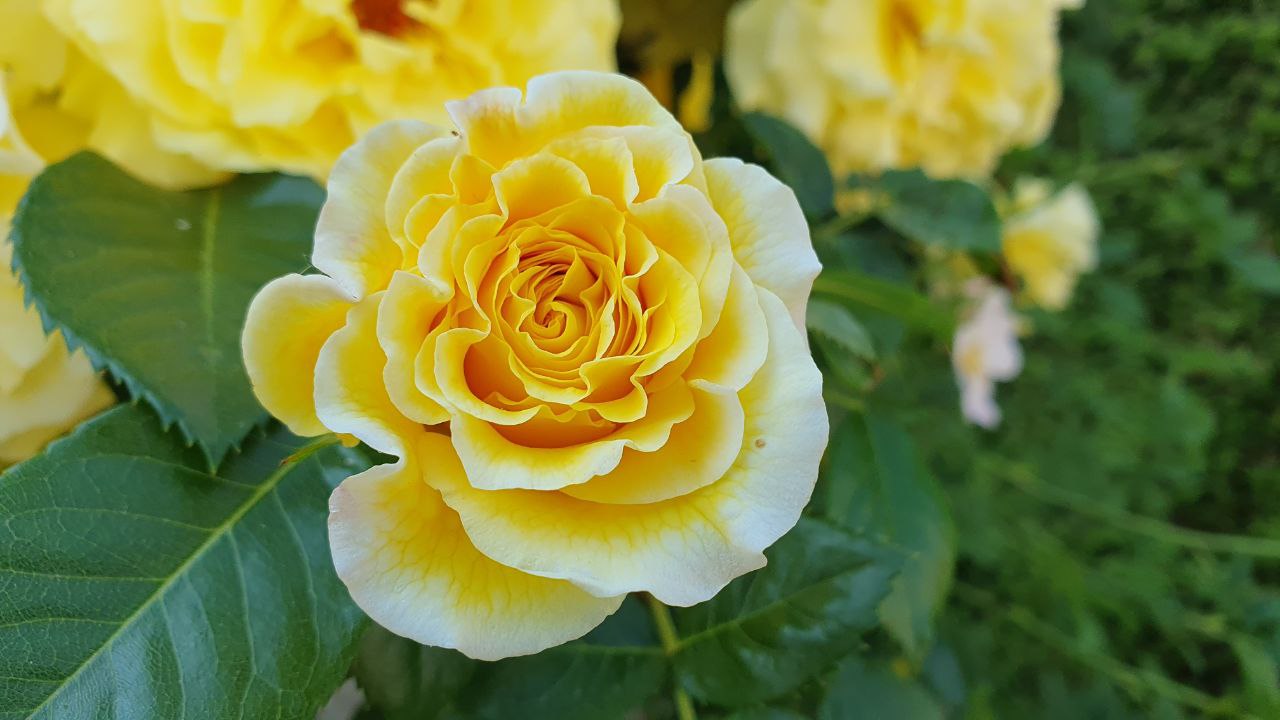
Top Crystals for Plants and Their Growth
In plants as in crystals, the language of nature reveals itself: “form is frequency”.
Sacred geometry is at work not only in the structure of a leaf or a blossom – it is also found in the inner matrix of a crystal.
When crystals and plants work together, two living systems meet that strive for harmony – like yin and yang, like root and light.
Top crystals for plants and their growth:
1. Green aventurine
-
Effect: Promotes new growth, vitality and regeneration.
-
Why: Its green color resonates with the heart energy of the plant world. It is regarded as the “growth stone”.
-
Use: Place it in the soil, especially for ailing or young plants. Or use the Aquadea Aquajet with the crystals of your choice.
2. Moss agate
-
Effect: Grounding; strengthens the connection to nature, supports healing and root strength.
-
Why: It symbolizes Mother Nature – ideal for strengthening plants and fostering a harmonious plant environment.
-
Use: Place it in a flowerpot or garden bed.
3. Rock crystal
-
Effect: Energetic amplifier; clarifies and balances.
-
Why: It amplifies the effect of other stones and “reboots” the energy field – including that of plants.
-
Use: Use it in combination with other crystals or place it in the watering water. Included as the outlet in the Aquajet .
4. Amethyst
-
Effect: Protection, cleansing, balancing of stress energies (in plants, too).
-
Why: When plants stand in a burdened room (e.g. with a lot of electrosmog or negative energy), amethyst can help.
-
Use: Place it near the plant.
5. Rose quartz
-
Effect: Loving vibration, harmony.
-
Why: Plants respond well to loving energy – rose quartz promotes growth through emotional “warmth”.
-
Use: Good for healing gardens or rooms in which plants are meant to foster comfort and gentleness.
6. Selenite
-
Effect: Cleansing, light, recharging.
-
Why: Helps clear the aura of plants – especially houseplants that get little sunlight.
7. Effect of unakite on plants and their surroundings
Unakite acts as an energy mediator between earth and life force – its strength lies in the root zone, in recovery after stress and in slowly, powerfully regrowing energy.
Ideal for:
-
Recovery of weakened plants (e.g. after pest infestation, repotting or a change of location)
-
Root formation and stabilization – especially for cuttings or young plants
-
Plants in stressful environments (e.g. near electronic devices, on city balconies, close to radiators)
-
Energetic harmonization of plant groups – conveys balance and calm
Unakite crystal: symbolism & geometry
-
Unakite is not a pure crystal but a natural combination of three minerals – each carrying its own geometric signature:
-
Epidote (green): regeneration, connection with nature, cell building
-
Feldspar (pink): gentleness, emotional opening
-
Quartz: clarity, structure, order
-
This trinity makes unakite a stone of integration – it is reminiscent of the biological rhythm of life, in which regeneration, rest and growth form an inseparable unity.
Tips for use:
-
Cleanse the crystals (e.g. with moonlight, sage or clear water – depending on the stone!).
-
Make energy water: Place suitable stones in water for a few hours and water your plants with it. Or use the Aquadea Aquajet with the crystals of your choice, and you get highly potentized energy water as it flows through.
-
Place crystals directly in the soil: Especially in plant pots or garden beds.
-
Lay a crystal grid around plants for targeted energetic support.
💚 Green tourmaline (verdelite)
Effect on plants:
-
Promotes life force, regeneration and energy flow – both in plants and in their surroundings.
-
Energetically (symbolically) supports chlorophyll formation, as it is strongly connected with the heart chakra and the element earth.
-
Acts as a natural “healer” for weakened plants.
Using green tourmaline :
-
Ideal for plants that have experienced stress from repotting, a change of location or pest infestation.
-
Place it in flowerpots or in the soil of beds where you would like to bring about revitalization.
🌟 Energetic bonus:
-
It also promotes the connection between people and plants – ideal for anyone who wants to “communicate” with plants or work with them energetically (e.g. gardening as meditation).
The inner crystal structure of a mineral reflects not only its physical order but, in energy work, also its “information signature”. Green tourmaline (verdelite) shows some fascinating parallels to the plant world – both geometrically and symbolically.
Crystal structure of green tourmaline:
-
Crystal system: Trigonal (similar to hexagonal)
-
Crystal habit: Elongated, prismatic crystals with vertical striations or grooves along their length.
-
Inner geometry: Its atomic structure is based on borosilicate rings stacked in a linear arrangement.
-
This structure creates a strong directional flow of energy – comparable to the flow of sap in a plant (from root to leaf tip).
Geometric and energetic parallels to the plant world:
Crystal structure – green tourmaline Plant counterpart Meaning Elongated, stretched form Stems, leaf veins Conduction of energy & nutrients Vertical grooves/structures Phloem/xylem (vascular tissue) Structured vitality Trigonal system (three axes of symmetry) Three-leaved plant forms, spirals Harmony in growth and expansion Stability + flexibility Plants that lean toward the light Adaptation & development
Energetic essence:
Green tourmaline is like an energetic image of a healthy plant stem – strong, permeable, structured and oriented toward the light. It promotes growth naturally because its geometry symbolizes directed life force. One could say: it “thinks” like a plant – only in crystalline form.
Spiritual symbolism:
-
Connection of heaven (light) and earth (root)
-
Growth in alignment with inner order
-
Resonance with the natural geometry of life
-
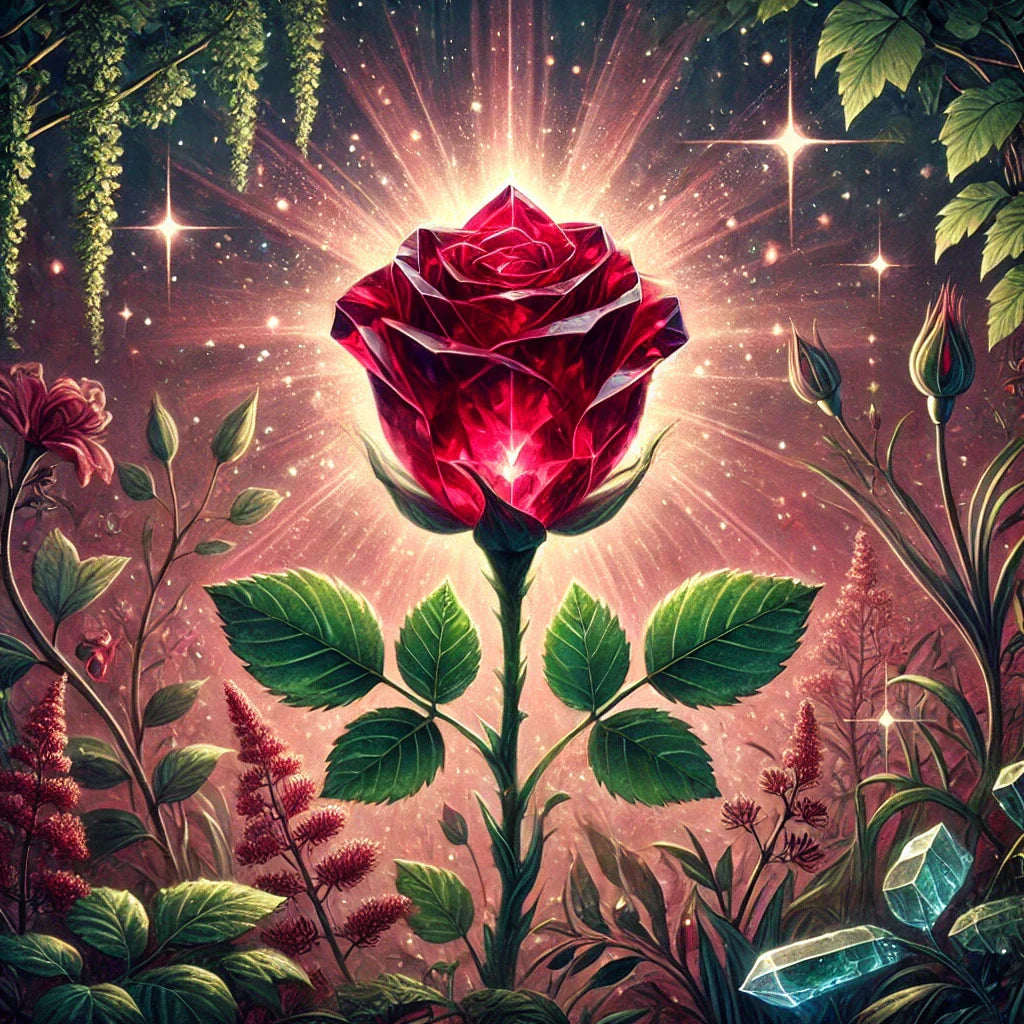
❤️ Ruby
Effect on plants:
-
Brings joy of life, warmth and strengthening of root power.
-
Symbolizes assertiveness and vital energy – it can help plants grow more vigorously, especially in challenging environments.
Use:
-
Especially good in low-light spots or for plants that are struggling.
-
Can be placed near plants to give protection and energy – much like an “energetic fertilizer”. Or as a crystal in the Aquadea Aquajet garden sprayer. Or in other Aquadea garden products.
Ruby – the fire in the root (Hexagram 55: Feng 豐 – Abundance)
- Classification: trigonal, crystallizes in a powerful geometry
- Geometry: compact, clearly structured – intense core strength
- Effect: energy, assertiveness, protection
- Sacred geometry: the tetrahedron, symbol of fire
- Dao principle: abundance through courage and presence

Conclusion – crystals as bringers of resonance
Plants “live” sacred geometry – whether in the golden ratio of a leaf or the spiral of a sunflower.
Crystals “carry” these geometries in a quiet, mineral form – as stored frequency.
Used consciously in the garden, in the home or in energy work, they act like “resonating bodies” for the field of nature – and help plants thrive in harmony with their surroundings and their inner blueprint.
Here you will find a structured and deeper explanation of green aventurine in the context of plants, sacred geometry and energetic effect – with reference to the previous topics.
💚 Green aventurine – the crystal of gentle growth
General profile
-
Crystal system: Trigonal (quartz group)
-
Color: Soft to vivid green, often with mica inclusions (fuchsite)
-
Name: From the Italian “a ventura” – “by chance”
-
Energetic radiance: Hope, new beginnings, growth, opening of the heart
Effect on the plant world
Green aventurine is traditionally regarded as a “lucky stone” for new growth – both figuratively (e.g. new beginnings in life) and literally for the plant world:
-
Promotes the regeneration of weakened plants
-
Strengthens the vital radiance of leaves and roots
-
Supports the “heart connection” to the plant – important for people who want to enter into resonance with their green companions
-
Ideal for repotting, moving or new growth
Sacred geometry in aventurine
-
Aventurine is based on the quartz structure, which forms six-sided (hexagonal) patterns – these are also reflected in the structure of leaves, cell walls and honeycombs.
-
The microscopic fuchsite particles in green aventurine create a soft glitter – similar to the shimmer of morning dew on young leaves.
-
Its inner order follows rhythms of growth: spiral, symmetrical, pulsating – analogous to the Fibonacci sequence as it occurs in the plant world (e.g. sunflowers, pine cones).
Connection to the I Ching (Daoist system)
Hexagram 53 – “Jian 漸” – Gradual Growth
-
This sign describes slow, steady unfolding – like a tree that forms its rings year after year.
-
Green aventurine embodies exactly this principle: growth without haste, in harmony with the natural order.
-
It helps plants (and people) not to overextend themselves, but to thrive rhythmically, steadily and at their own pace.
Summary
| Aspect | Green aventurine |
|---|---|
| Element | Earth + heart energy |
| Geometry | Hexagonal order (quartz structure) |
| Energetic effect | Gentle growth, regeneration, hope |
| Connection to the plant world | Strengthening during transitions, fostering new beginnings |
| Daoist principle | Jian – steady, unstoppable growth |
🌸 Rose quartz – gentleness, harmony & the vibration of love
General profile
-
Crystal system: Trigonal (like rock crystal and aventurine – quartz family)
-
Color: Delicate to milky pink, caused by titanium, iron or manganese
-
Energetic signature: Love, harmony, emotional healing, receptivity
-
Traditional association: Heart chakra, Venus principle, gentleness
🌱 Effect on the plant world
Rose quartz is not a typical “growth stone”; rather, it has a subtly supportive effect by improving the energetic milieu for plants – especially in living spaces or burdened environments.
-
Promotes a harmonious plant environment – above all for indoor plants
-
Has a calming effect on stressed plants, e.g. after a change of location or pest infestation
-
Strengthens the energetic bond between people and plants – for plant lovers with an intuitive approach
-
Particularly suitable for rooms in which plants are meant to influence the emotional atmosphere (e.g. bedrooms, meditation spaces, therapy rooms)
Sacred geometry in rose quartz
-
The trigonal crystal structure energetically forms gentle, rhythmic waves – in contrast to angular, purposeful crystals.
-
The stone often shows no visible crystal form but grows massively – this reflects its inner principle: acting not through form but through vibration.
-
Symbolically, its energy stands for the steady heartbeat, the center of all life forms.
Parallels in plants:
-
Petals (e.g. rose, peony) follow the golden ratio in their arrangement – rose quartz carries this soft spiral energy in its frequency.
-
The soft pink color is found in delicate plant forms such as new shoots, young buds or the first light at sunrise.
Connection to the I Ching – Daoist association
Hexagram 31 – “Xian 咸” – Influence / The Gentle Approach
-
This sign stands for empathy, resonance and opening of the heart – the ability to influence through softness.
-
Rose quartz works not through force but through resonance – like the morning dew that moistens the leaf without bending it.
-
Ideal for harmonizing rooms, gardens or beds with many sensitive plants.
Summary: rose quartz
| Aspect | Rose quartz |
|---|---|
| Element | Water & heart energy |
| Geometry | Trigonal system – yet massive & wave-like |
| Energetic effect | Gentleness, emotional harmony, vibrational healing |
| Effect on the plant world | Stress reduction, harmonization of spaces, empathy |
| Daoist principle | Xian – gentle influence through resonance |
Unakite is a fascinating and rather underrated stone – both in energy work with people and in relation to plants. Thanks to its earthy, vital vibration and its special mix of minerals, it has a connecting, stabilizing and regenerating effect – perfect for the plant kingdom.
Unakite – the crystal of gentle regeneration and connection with the earth
Mineralogical profile
-
Composition: A mix of epidote (green), feldspar (pink to salmon) and quartz (colorless to gray)
-
System: Usually massive, no distinct crystal form
-
Color: Olive green with pink inclusions
-
Sources: USA, South Africa, Brazil, China
Daoist correspondence in the I Ching: Hexagram 18 – “Gu 蠱” – Work on What Has Been Spoiled
-
This hexagram describes the cleansing, healing and restoring of a disturbed order – it is about rebuilding from the innermost core.
-
Unakite fits this perfectly: it promotes quiet healing in the root zone – not through force, but through connection with the earth and balance.
-
In plant care it is a stone of patience – its effect is not spectacular but lasting, balancing, regenerating.
Summary: unakite-epidote
| Aspect | Effect of unakite |
|---|---|
| Effect on plants | Regeneration, root strengthening, stress relief |
| Element | Earth + heart + structure |
| Geometry | Mineral trio – stabilizing diversity |
| Ideal for | Young plants, recovery, urban plants |
| I Ching association | Hexagram 18 – “cleansing, restoration” |
| Energetic signature | Gentle stability, balance, understated depth |



Leave a comment
This site is protected by hCaptcha and the hCaptcha Privacy Policy and Terms of Service apply.